Editorial guide · 4 min read
Industrial plastics segregation and recovery
Industrial plastic streams may include offcuts, rejected parts, production purge and packaging.
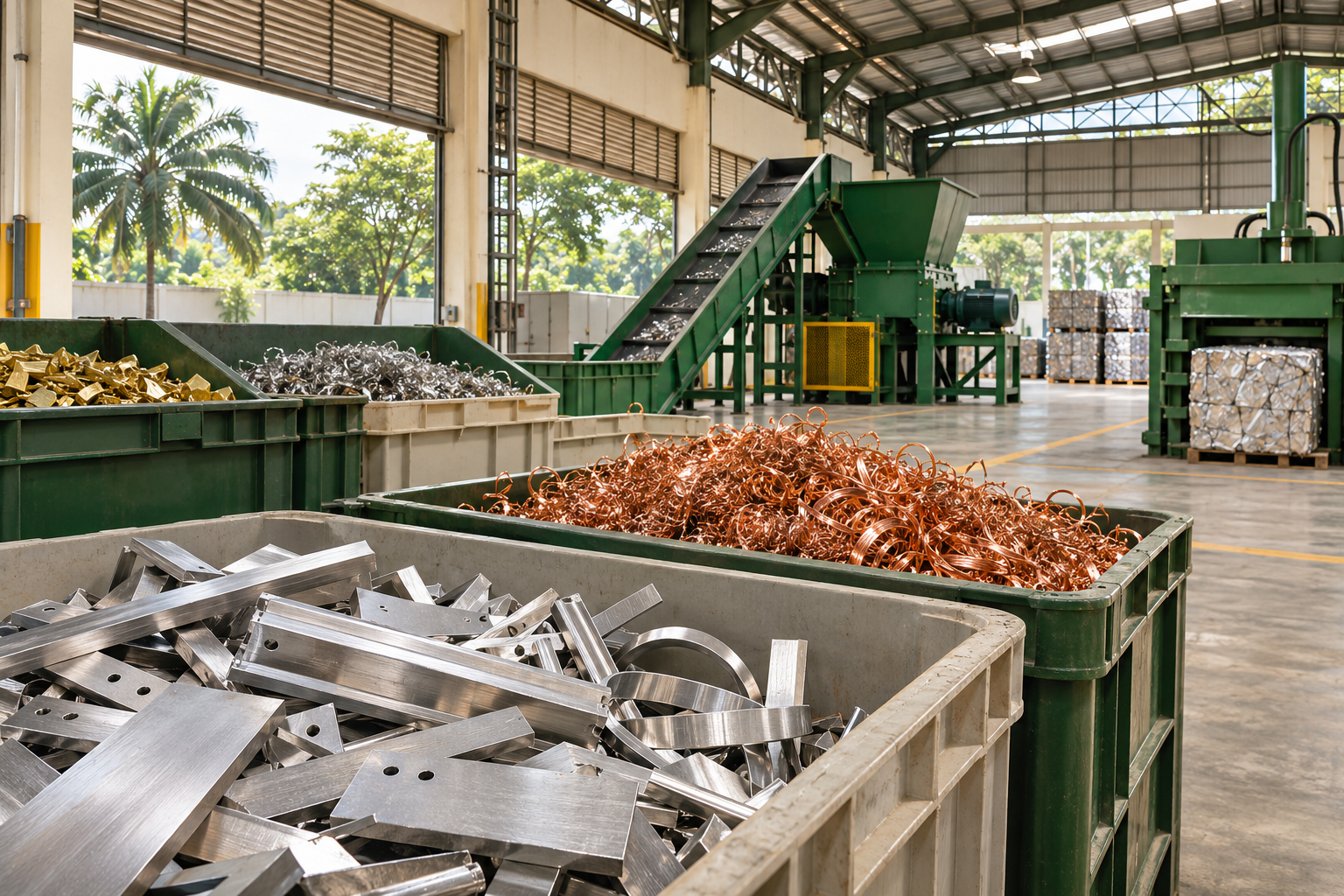
An industrial plastics recovery plan starts with describing the material as it leaves the production process. A factory may have clean trim from one production line, rejected finished parts, purge material and discarded packaging. Each stream can present different questions about polymer, colour, attachments and contamination. Keep that information with the batch and ask the intended receiver which characteristics affect acceptance. This lets a site compare recovery options using the material it actually generates rather than a broad description such as mixed plastic.
Identify polymer and process together
Begin with the product specification or purchase record where it is available. Record the polymer or material designation, the operation that generates the scrap and the condition in which it is collected. Identify any coatings, adhesives, labels or components that remain attached. A part produced from a known polymer may contain additives or another material that matters to a receiver. A packaging film can contain several layers even when the outer surface looks like a familiar plastic. Where the composition is uncertain, record the gap and ask what evidence the receiver needs to assess the batch.
The process description also helps distinguish clean material from material that has been used in a different setting. Offcuts collected before assembly may have a different profile from rejected items with adhesive or metal inserts. Production trim that is kept dry can differ from plastic that has contacted a cleaning solution or lubricant. Keep these streams distinguishable while determining the appropriate route. If the contact or condition raises questions about scheduled waste classification, refer to the Department of Environment’s guidance and review the source and characteristics with the responsible technical team.
Set practical sorting boundaries
Agree which streams need separate containers and which materials the receiver has agreed can be collected together. A site with several grades of the same polymer can use separate records even when the grades are initially stored near one another. Place the sorting instruction close to the point of generation and use terms operators recognise. For example, distinguish dry trim from coated rejects using the actual production terms. Keep an identified route for unusual batches such as material from a trial run. Staff should be able to flag an unfamiliar batch without guessing which existing stream it belongs to.
Review what happens during line changeovers. A scrap container may be started under one product and continue receiving material after the recipe, colour or construction changes. If those differences affect acceptance, define when the container or batch record changes. Record the date and line so the material can be traced to production information. Check the storage and collection stages as well. Sorting at the machine is useful only if the material stays identifiable until the receiver can assess or accept it.
Ask receivers for evidence and conditions
Give each potential receiver the same basic description: polymer or known components, process origin, physical form, expected quantity and any contaminants or attachments. Ask what it needs to know about additives, colour, moisture and variation. Ask which quantities are acceptable and whether packaging or a sample is needed. A resin identification mark can help communicate the material family, but the actual batch still needs to meet the receiver’s input requirements. Obtain a written description of the proposed service and clarify which facility is expected to receive the material.
Check how the receiver records accepted and rejected quantities. If it quotes a price, ask which measurement is used and what happens to material that fails inspection. For recurring streams, agree how the site should notify the receiver when the product construction or contamination changes. This conversation also helps the site decide whether better sorting would make a route workable. If a receiver needs an input that the site cannot provide consistently, record the limitation and assess another option rather than treating the initial quote as unconditional acceptance.
Compare two streams from the same line
Consider a packaging line that produces clean polypropylene trim and a separate film reject with a coating and adhesive. The supplier’s specification helps identify the trim, and the line supervisor can explain when and how it is collected. Procurement can give the receiver the specification and ask whether grade, colour or packaging limits apply. For the film reject, the site can describe the layers and adhesive as far as the records allow and explain what remains uncertain. The receiver can then assess each stream separately and state whether further evidence is needed.
If the line starts using a different coating, the site should flag the first affected batch and compare it with the earlier acceptance conditions. The old description may still be useful for previous material, while the new batch needs review. Update the sorting instruction and inventory together if the stream is split. Confirm any change in destination before the next collection. Tracking the change by batch prevents the receiver from interpreting a changed material as the one previously agreed.
Review recovery results
Compare quantities generated, dispatched and accepted, and keep evidence for what happens after acceptance where it is available. Record rejected or separately managed material using its actual outcome. Malaysia’s Plastics Sustainability Roadmap provides policy context for material circularity. At plant level, the useful measure is a documented route and the quantities supported by records. Use recurring rejection reasons to improve identification or segregation and review the arrangement whenever production inputs or receiver conditions change.