Editorial guide · 4 min read
How to prepare a manufacturing waste inventory
A useful inventory begins with a map of processes and material flows.
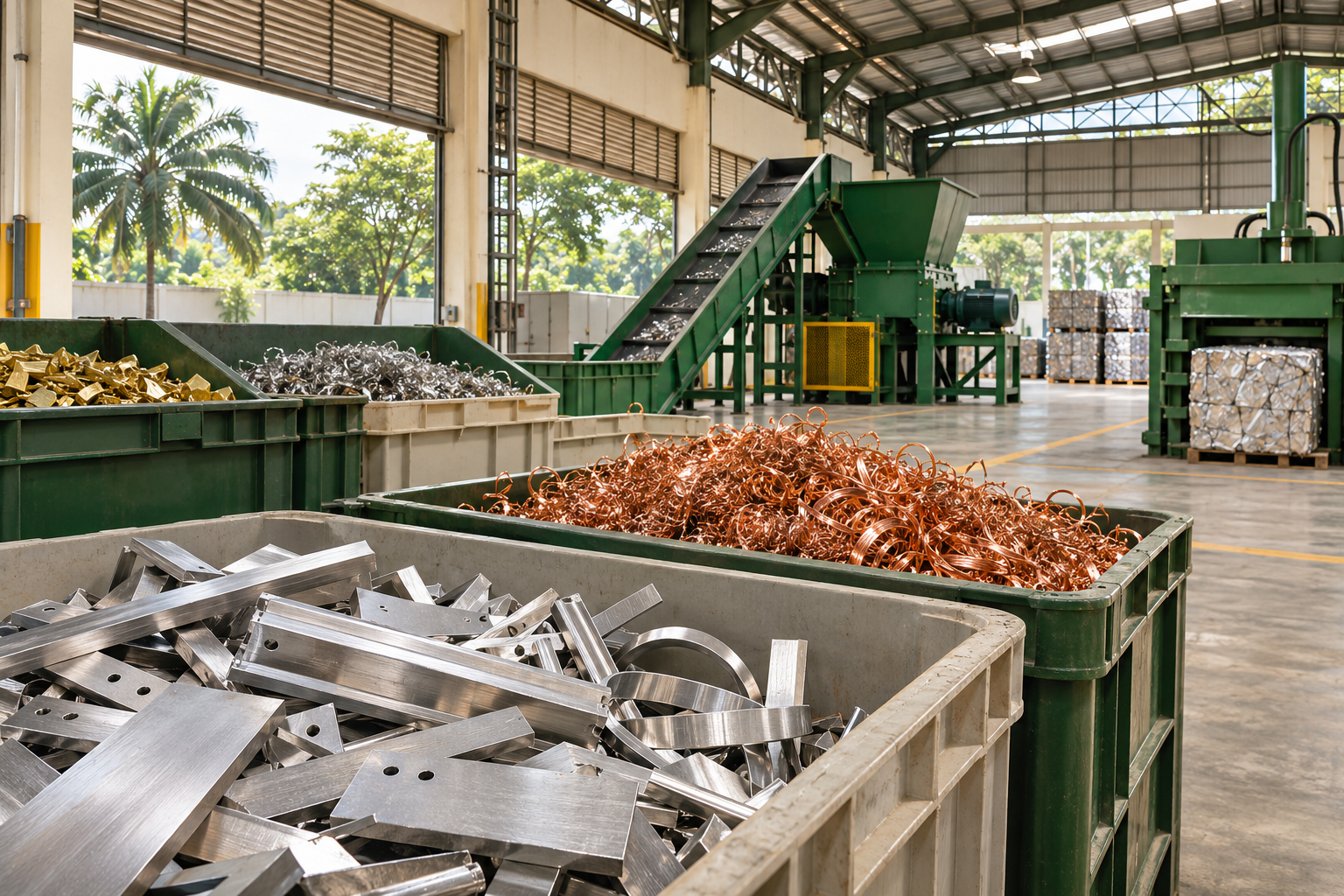
A manufacturing waste inventory should let the site account for what it generated, what it still holds and what went to each destination. Start with the processes rather than a list of collector invoices. An invoice can tell you what was charged on a collection date, while a production record explains where material came from and when it entered storage. Link those records through a stable stream identifier. The resulting inventory can support classification review, service procurement and reporting without asking one number to answer several different questions.
Walk the processes and define each stream
Make a list of production lines and supporting activities. Include packing, maintenance, cleaning, rejected production and occasional projects. Visit each area with the people who work there and ask what is discarded during normal operation, at changeover and when something goes wrong. Follow each material to the first point of collection and then to storage. If two lines use the same bin, find out whether their materials are intentionally combined and whether records still show the source of each contribution. If the site cannot describe the mixture reliably, flag it for review.
Give each stream an identifier that can remain stable when the name used by a collector changes. Record its generating activity, physical form, known inputs, storage point and the person who can explain its history. Keep classification and acceptance as separate fields with links to the evidence used for each decision. If a code is under review, record the reason and the next action. A provisional description can help the site keep track of the material while the responsible reviewer determines the appropriate classification. Do not fill the field with a code copied from an invoice without checking what it describes.
Choose quantities that can be reconciled
Record the unit and measurement basis. Where a scale is used, check whether the record shows the net material weight or the weight of the container as well. If the figure is an estimate based on container capacity or frequency, write down the assumption and mark it as an estimate. Avoid mixing litres, kilograms and container counts in the same total. Where conversion is necessary for an internal calculation, retain the original quantity and record the basis for the conversion. This lets someone review the result if better evidence becomes available.
Choose a reporting period and identify the opening stock, material generated, transfers out and closing stock. If a facility uses a monthly inventory, material stored at the end of one month may be collected during the next. Counting the later collection as new generation overstates the second month and leaves the first month incomplete. Keep the generation and collection dates separately. For batches that are combined, retain the links from the original entries to the combined collection so quantities can be traced without counting the same material twice.
Connect collection and destination records
Before a planned transfer, record the receiving site and acceptance reference. At handover, check that the collection record describes the actual stream, quantity and intended destination. After delivery, match the receipt or acceptance record to the shipment. If the receiver reports a different weight or rejects part of the load, record both figures and the reason where known. Keep unresolved quantities visible. A pickup record shows movement from the site. Evidence from the receiver may be necessary to confirm what was accepted or what happened afterward.
For scheduled waste, use the applicable official inventory and recordkeeping requirements. Regulation 11 of Malaysia’s Environmental Quality (Scheduled Wastes) Regulations 2005 refers to an accurate and current inventory in accordance with the Fifth Schedule. Check the official schedule and relevant Department of Environment guidance when deciding which information must be recorded and retained. An internal manufacturing worksheet can hold additional production, storage and procurement data. Cross-reference it with the applicable formal inventory so a reviewer can identify the same stream and quantity in both systems.
Example of reconciling a month with a maintenance shutdown
Consider a site that collects regular production scrap and generates a separate batch during a shutdown. In the month of the shutdown, some production scrap remains in storage, while the collector removes material carried over from the previous month. The maintenance batch is assessed separately and remains on site at month-end. A report based only on collection weights would omit that batch and attribute the carryover to the wrong month. The site can correct the report by recording the opening balance, the new production material, the shutdown batch and the actual collections as separate movements.
If the closing stock does not reconcile, investigate the difference before adjusting the figure. Check whether a collection crossed the period boundary, whether the recorded weight included packaging, and whether a batch was moved internally without a corresponding entry. If the reason cannot be established, record the discrepancy and assign someone to review it. A transparent unresolved difference is more useful than a balanced figure that cannot be supported by evidence.
Review the inventory when the site changes
Give process owners a way to report new materials, changes in cleaning products and other events that affect existing streams. Review the inventory after a shutdown, a new product run or a change of receiver. Use the record to identify where quantities are estimated, classification is uncertain or destination evidence is missing. Prioritise the gaps that affect a planned transfer or published report. A useful manufacturing inventory lets another person understand each decision and trace material from its generating process through storage to the recorded destination.